A pitcher has the hardest job on the field. He could allow only 2 runs across 7 innings pitched, but if the offense doesn’t produce, statistically it is the fault of the pitcher. Ultimately, the pitcher’s job is to minimize damage to allow his offense to produce the runs necessary to win the game. This post breaks down who is doing this the best in the National League.

Terminology
To understand this article, you should have a basic understanding of pitching metrics. Here’s a breakdown:
Quality Start (QS): A pitcher achieves a quality start if he pitches 6 innings or more with three earned runs or less
Earned Run Average (ERA): ERA is the number of runs earned per 9 innings pitched. A run is only earned if the hitter reached base due to the pitcher (e.g. walks, hit by pitch, hits, and home runs). A pitcher can continue to earn runs after they are taken out. If the reliever comes in with two runners on base and those two runners were to score, the runs go to the pitcher who allowed those two to reach base. The formula is earned runs/(innings pitched/9).
Strikeouts per Nine (K/9): Exactly what it sounds like. It’s just ERA but replacing earned runs with strikeouts.
Wins Above Replacement: Kind of a stupid metric. For a pitcher, some big wig statistician takes ERA or FIP, adjusts it to league and ballpark, then adjusts it to league averages. Not super necessary to understand how it works, just know that the higher the WAR, the better.
Walks and Hits per Inning Pitched (WHIP): Again, pretty self-explanatory. Take the sum of walks and hits then divide it by innings pitched. The lower the better.
Fielding Independent Pitching (FIP): A measure of how the pitcher performs independent of fielding. It only focuses on hit by pitch, walks, strikeouts, and home runs, then compares it to the league average ERA. The lower FIP is, the better
Wins: A pitcher only gets the win if they’re on the mound in the inning in which the offense produces the game-winning run. The starter only gets the win if he pitches 5+ innings
Losses: A pitcher gets the loss if they’re on the mound when the opposing team scores the game-winning run
No Decision: If their offense does not produce this run at the time the starting pitcher is taken out, but later scores the game-winning run, the starter earns a no-decision. The same goes for if the starting pitcher doesn’t allow the losing run.
Coors Field: Home stadium of the Colorado Rockies. Most hitter-friendly ballpark in baseball. A pitcher’s worst nightmare is the phrase “congratulations, you’ve been drafted by the Colorado Rockies!”
10. Austin Gomber (COL)

It’s not often you see a pitcher from Coors Field post decent pitching numbers, but Austin Gomber has been surprisingly lights out this season. While the Rockies aren’t winning any games (18-34 team record), Austin Gomber has posted 5 quality starts across 10 games started, unfortunately coupled with a 1-2 record. Gomber’s putting together quite an impressive resume this year, with a 2.76 ERA, a 2.2 WAR, and a 1.11 WHIP. If he can keep this going through the stretch, he won’t win the Cy Young, but at the very least he can get traded out of Colorado for a rebuild. The Rockies don’t usually get a lot of tradebait, so they should capitalize on this while they can. Some might argue about his high FIP, but not every pitcher is a strikeout pitcher; getting a hitter to make weak contact is a skill in its own right.
Stats:
- 10 GS
- 5 QS
- 1-2 W/L
- 2.76 ERA
- 6.3 K/9
- 2.2 WAR
- 1.11 WHIP
- 4.59 FIP
9. Javier Assad (CHC)
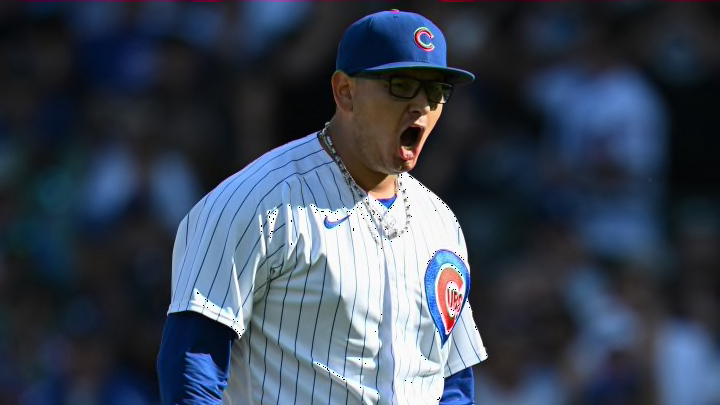
Javier Assad looks like the grownup version of Russell from the Disney/Pixar movie “Up,” but he’s out-pitching most of the league right now. With a 1.70 ERA and a 1.11 WHIP, he’s keeping runs down and baserunners limited and it’s easy to see how he has a NL-fourth-place WAR of 2.4. But his lack of strikeouts combined with how many balls he puts in play keeps him from finding further success.
Stats:
- 10 GS
- 3 QS
- 4-0 W/L
- 1.70 ERA
- 7.8 K/9
- 2.4 WAR
- 1.11 WHIP
- 3.56 FIP
8. Freddy Peralta (MIL)
/cdn.vox-cdn.com/uploads/chorus_image/image/73203713/usa_today_21065807.0.jpg)
So far, Freddy Peralta’s biggest headline of the season has been the bench-clearing brawl that ultimately started with Peralta plunking Tampa Bay’s Jose Siri. Over the course of the first third of the season, he has posted a 11.3 K/9 with a 1.08 WHIP across 10 starts, five of which were quality starts. While his 3.81 ERA is the lowest of the pitchers on this list, he’s providing quality pitching that falls short of achieving the win due to a lack of offense. His 3-3 record so far is indicative of this. Across Peralta’s three losses, he allowed 9 runs across 17 innings pitched for a whopping 4.76 ERA while posting a K/9 of 9.53; in only one of these games did the offense produce any runs. Across his three wins, he allowed 4 runs across 17.1 innings pitched for a 2.08 ERA. Those wins make up for two of his quality starts while the losses account for one, leaving two quality no-decisions.
Stats:
- 10 GS
- 5 QS
- 3-3 W/L record
- 3.81 ERA
- 11.3 K/9
- 0.9 WAR
- 1.08 WHIP
- 3.44 FIP
7. Hunter Greene (CIN)
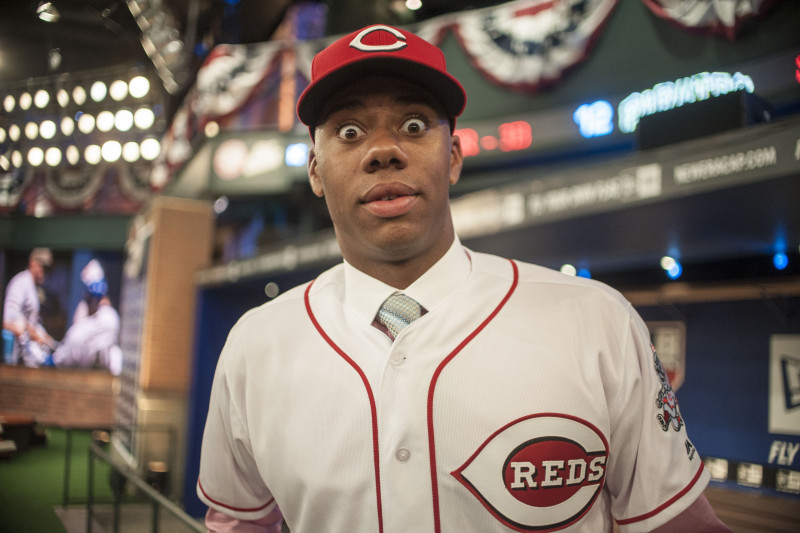
When Hunter Greene debuted in 2022 against my Atlanta Braves, I remember saying to my grandparents, “my only problem is that he doesn’t pitch for us.” Of course, shortly afterward we got Spencer Strider and his high velocity fastball, but that doesn’t negate the fact that Hunter Greene quickly became known for one of the best fastballs in baseball. He’s continuing that pattern this year, with a heavy emphasis on strikeouts. He’s not getting all of the wins that he and the Reds want, largely due to a lack of the team’s success at the plate. But his low ERA, high K/9, and low WHIP come together to bring us one of the best pitchers in the league.
Stats:
- 11 GS
- 5 QS
- 3-2 W/L
- 3.06 ERA
- 9.9 K/9
- 2.5 WAR
- 1.14 WHIP
- 3.17 FIP
6. Dylan Cease (SD)
/cdn.vox-cdn.com/uploads/chorus_image/image/73217468/2092899251.0.jpg)
As a lifelong Atlanta Braves fan, I was ecstatic when I heard General Manager Alex Anthopoulos was pursuing Dylan Cease. After being an AL Cy Young finalist in 2022, his 2023 season fell well short of what Cease was doing the previous year. But his 2022 stats showed a lot of promise, especially when he’s given a half-decent pitching coach staff. Ultimately he ended up being too expensive for Atlanta, so he got traded to the Padres where he has since thrived. His low ERA, NL-runner-up K/9, and sub-1.00 WHIP show us that he’s closer to ’22 form than ’23 form this season.
Stats:
- 11 GS
- 6 QS
- 5-4 W/L
- 3.29 ERA
- 11.2 K/9
- 1.1 WAR
- 0.96 WHIP
- 2.78 FIP
5. Zack Wheeler (PHI)
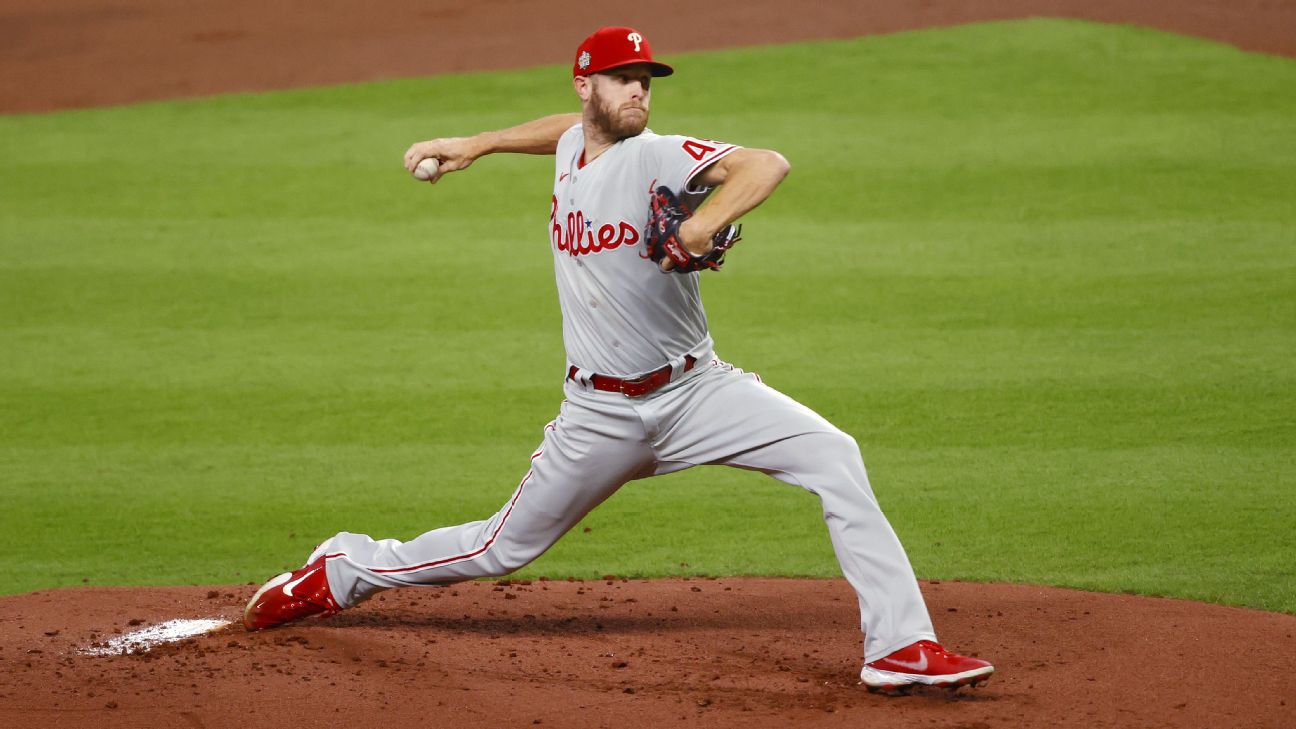
Zack Wheeler has been a staple in the Phillies rotation in recent years and it’s not hard to figure out why the current best team in baseball loves him so much. He sits hitters down as fast as possible, whether it’s via strikeout or the all-star caliber defense he has behind him. They say consistency is key, and over the years, if Zack Wheeler’s been one thing, it’s consistent. If he’s been two things, he’s been consistent and dominant.
Stats:
- 11 GS
- 8 QS
- 6-3 W/L
- 2.53 ERA
- 10.1 K/9
- 1.4 WAR
- 0.98 WHIP
- 2.90 FIP
4. Tyler Glasnow (LAD)
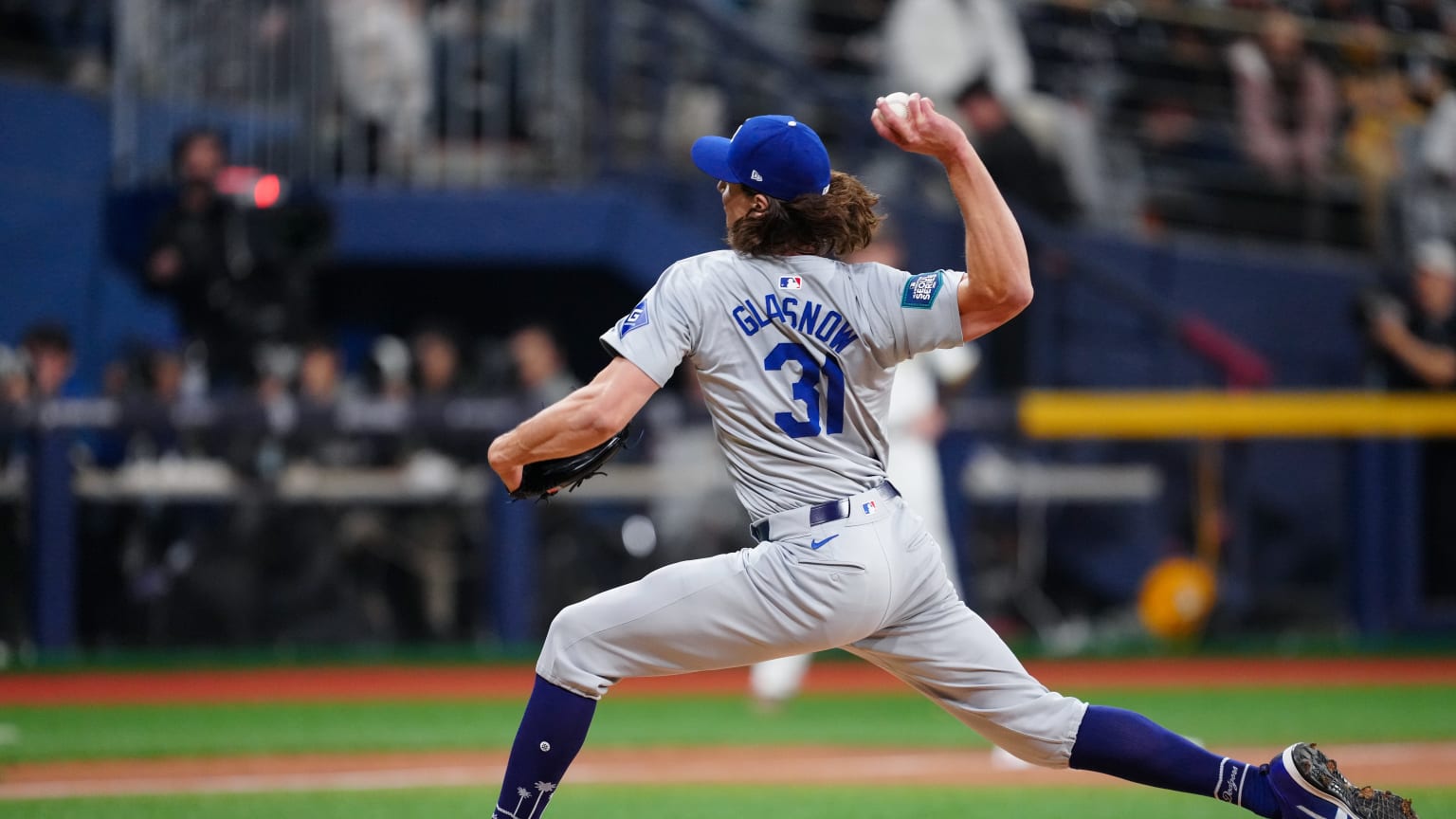
Tyler Glasnow was one of four key offseason moves the Dodgers made in 2023-2024. After locking up Shohei Ohtani and Yoshinobu Yamamoto (try saying it as “yoshibobu yababobo,” it’s fun), the Dodgers quickly locked up former Rays ace Tyler Glasnow and Mariners outfielder Teoscar Hernandez. With Shohei out due to a Tommy John revision, Yamamoto was believed to be the best arm LA added this offseason, with Glasnow serving as rotation depth. Instead, Glasnow has become one of the best arms in baseball. His 11.7 K/9 is the best in the National League and the third best in the MLB. He’s only allowed 23 runs this year, 6 of which were home runs. Any pitcher with velocity is going to have a high K/9 while having a majority of runs come from the long ball. He’ll be fine, and don’t be surprised if he wins the Cy Young in the next few years.
Stats:
- 11 GS
- 7 QS
- 6-3 W/L
- 3.09 ERA
- 11.7 K/9
- 1.5 WAR
- 0.91 WHIP
- 2.45 FIP
3. Chris Sale (ATL)
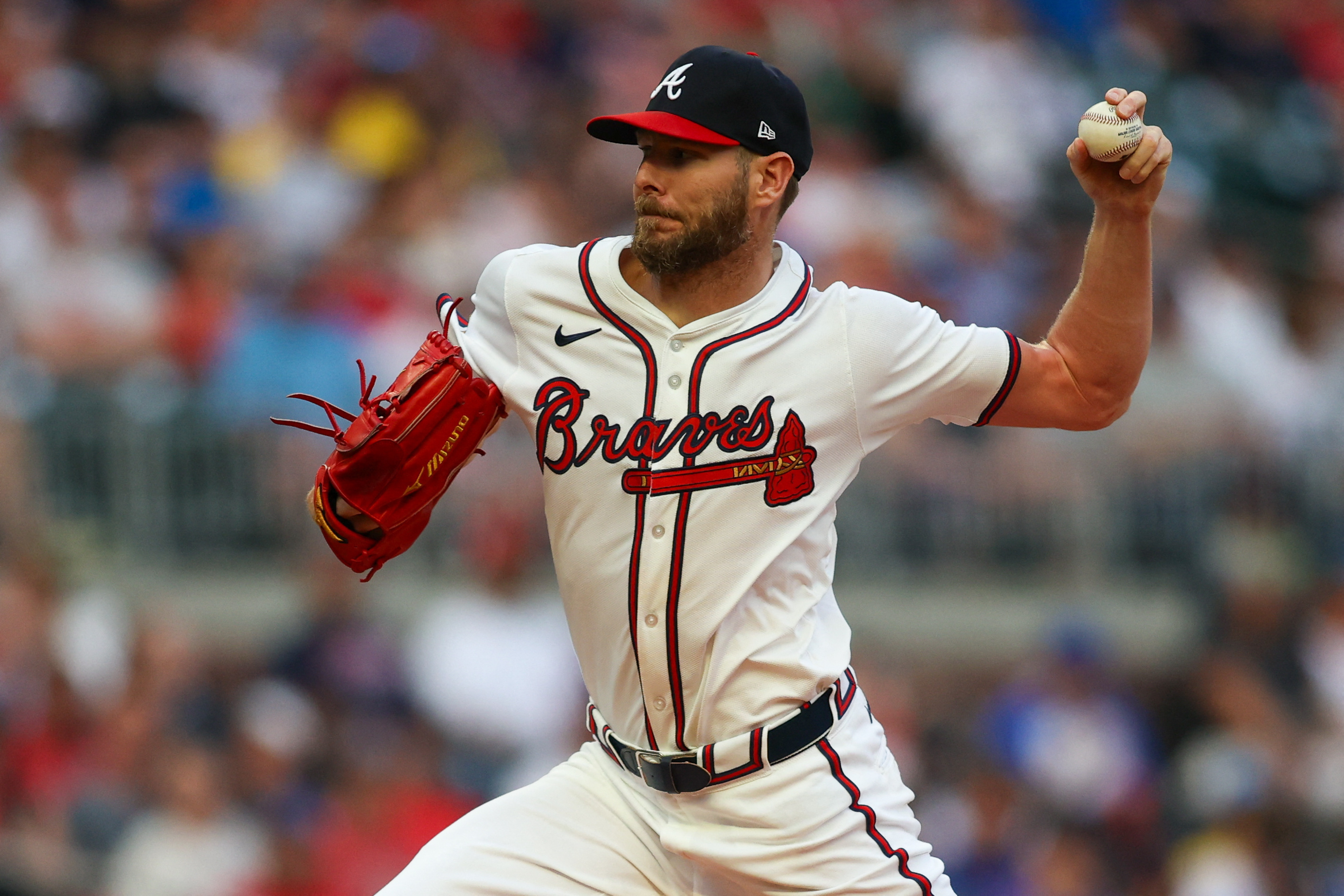
I was driving with my phone on 1% on December 30th, 2023. The final text I got before my phone died was from my sister, reading “Opinion on Braves trade espn notification sent out?” After rushing home, I was nervously optimistic upon finding out the Red Sox traded Chris Sale to the Braves in exchange for AAA shortstop Vaughn Grissom. I remembered how electric he was around 2017, and I was hoping for that version of Sale rather than the injury-ridden Sale we’ve seen since 2019. Man, were my hopes fulfilled. So far on the season, Sale is mowing down batters left and right with his filthy slider. We traded a great bat with one of the worst gloves I’ve ever seen for retro Chris Sale. It’s not just good for the Braves, it’s also good for baseball.
Stats:
- 10 GS
- 6 QS
- 8-1 W/L
- 2.12 ERA
- 11.1 K/9
- 2.1 WAR
- 0.86 WHIP
- 2.21 FIP
2. Ranger Suarez (PHI)

Ranger Suarez has always been a solid, dependable member of the Phillies rotation. This year, he’s surged ahead and has been nothing short of unhittable. He boasts the best WHIP in the MLB with an undefeated record to back it up. His only no-decision of the year came from a 5-4 win over the Braves (grrr) in which he only allowed 3 runs. If it wasn’t for Shota Imanaga, Ranger Suárez would be the clear, indisputable favorite to take home the Cy Young this year.
Stats:
- 10 GS
- 8 QS
- 9-0 W/L
- 1.36 ERA
- 9.3 K/9
- 2.8 WAR
- 0.79 WHIP
- 2.53 FIP
1. Shota Imanaga (CHC)
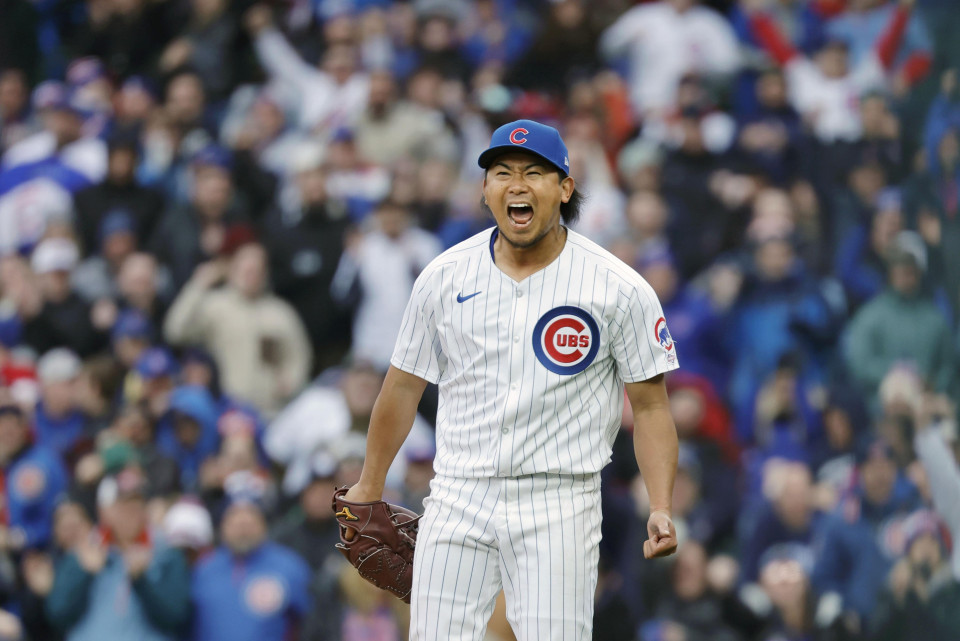
At this point in the season, it seems insane to think that Shota Imanaga was the second-most hyped pitcher to come from Nippon Professional Baseball (Japanese version of the MLB). He’s shocked the world, becoming the first pitcher in MLB history (as in literally ever) to post a sub-1.00 ERA across his first nine starts. His pitch repertoire so far this year has consisted of a fastball, a splitter, and a changeup. In other words, he’s already doing what nobody else has done with only three pitches. Is that scary enough if you don’t root for the Cubs? Well I got some more bad news for you. While being interviewed via translator on the Pat McAfee show, Shota said he has two more pitches he can bring out if the situation calls for it. He’s already the large-margin favorite to win NL Rookie of the Year; if he stays like this throughout the season, it would be nothing short of braindead to give the NL Cy Young to anybody but Shota Imanaga.
Stats:
- 9 GS
- 6 QS
- 5-0 W/L
- 0.84 ERA
- 9.7 K/9
- 3.0 WAR
- 0.91 WHIP
- 2.19 FIP
All stats are pulled from MLB.com, BaseballSavant, and FanGraphs. All pictures have their found source in italics as the photo captions.
 Heaters n Dingers
Good article! A couple of surprises. It definitely feels like there is a change at the top when it comes to best pitchers. It will be interesting to see where they are at the end of the season!
LikeLike